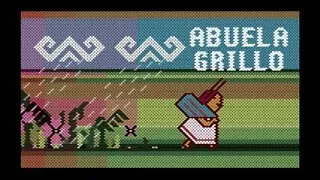
Abuela Grillo (Grandmother Cricket) is a short animated film inspired by a traditional Ayoreo Indigenous legend from Bolivia. Abuela Grillo has the magical ability to bring rain through her singing. Wherever she goes, the land flourishes and people have enough water to live.
When powerful businessmen discover her gift, they capture and imprison her, forcing her to produce rain so that bottled water can be sold for profit. As water becomes a commodity controlled by a few, ordinary people lose access to a resource essential for life. The exploitation of both Abuela Grillo and nature leads to environmental imbalance and social injustice.
Through rich symbolism and striking animation, the film explores themes of water privatization, environmental sustainability, Indigenous knowledge, human rights, and resistance against exploitation. While rooted in a Bolivian folktale, the story raises universal questions about who controls natural resources and whether essential elements of life should ever become commodities. It encourages viewers to reflect on the relationship between people, nature, and the shared responsibility of protecting the commons.
Environmental Literacy
By the end of the session, learners should be able to:
Learners will be able to:
Learners will:
Appreciate Indigenous ecological knowledge and oral traditions.
Explain how folklore can preserve environmental ethics.
Compare Indigenous understandings of nature with industrial models of development.
Reflect on whose knowledge is valued in modern societies.
Media Literacy
Learners will:
Interpret symbolism in animation.
Analyse how visual storytelling communicates complex political ideas.
Distinguish between literal and metaphorical meanings.
Evaluate how animation can function as social and political critique.
Ethics and Values
Learners will:
Reflect on fairness in access to common resources.
Discuss ethical questions surrounding profit from basic human needs.
Develop empathy for communities affected by environmental injustice.
Examine personal responsibility toward shared resources.
Economics
Learners will:
Understand the concepts of privatization and public goods.
Compare public ownership and private ownership of essential services.
Explain how markets may fail to provide equitable access to necessities.
Consider alternative models of resource governance.
Global Citizenship
Learners will:
Connect the story to real-world struggles over water around the world.
Recognize water as a human right.
Understand links between environmental sustainability and social justice.
Identify similarities between local and global environmental conflicts.
Competencies Developed
The film encourages students to develop:
Critical thinking
Ethical reasoning
Environmental awareness
Systems thinking
Empathy
Visual literacy
Communication and discussion skills
Democratic participation
Objective: Understand where water comes from and who controls it.
Activity:
Ask students to draw the journey of water from rain to their home.
Include:
Then discuss:
Learning: Systems thinking, geography, environmental literacy.
Objective: Experience unequal access to shared resources.
Give some groups many tokens and others very few.
Students “buy” water from one student acting as a company.
After a few rounds discuss:
Learning: Economics, empathy, justice.
Students recreate important scenes as still images.
Examples:
Each group explains:
Learning: Visual literacy, collaboration.
Students identify symbols in the film.
| Symbol | Possible Meaning |
|---|---|
| Rain | Life |
| Cage | Exploitation |
| Desert | Scarcity |
| Money | Profit |
| Abuela | Nature / Indigenous knowledge |
Then ask students to add two symbols of their own.
Motion:
“Water should never be privately owned.”
Divide class into:
Each prepares arguments.
Learning: Democratic dialogue.
Write one extra scene:
Can also be performed.
Students interview:
Questions:
Create a class map.
Groups create awareness posters.
Possible themes:
Display around school.
Play only the audio from one minute of the film.
Students imagine:
Then show the scene.
Discuss how sound changes meaning.
Students observe school.
Record:
Develop recommendations.
Students complete:
Students work in teams to investigate:
The project concludes with a public exhibition featuring maps, interviews, photographs, artwork, and student presentations that connect the themes of Abuela Grillo to their own locality.
These activities align well with competencies in environmental literacy, critical thinking, collaboration, communication, civic engagement, and creative expression, making the film an effective interdisciplinary resource for middle and secondary school classrooms.